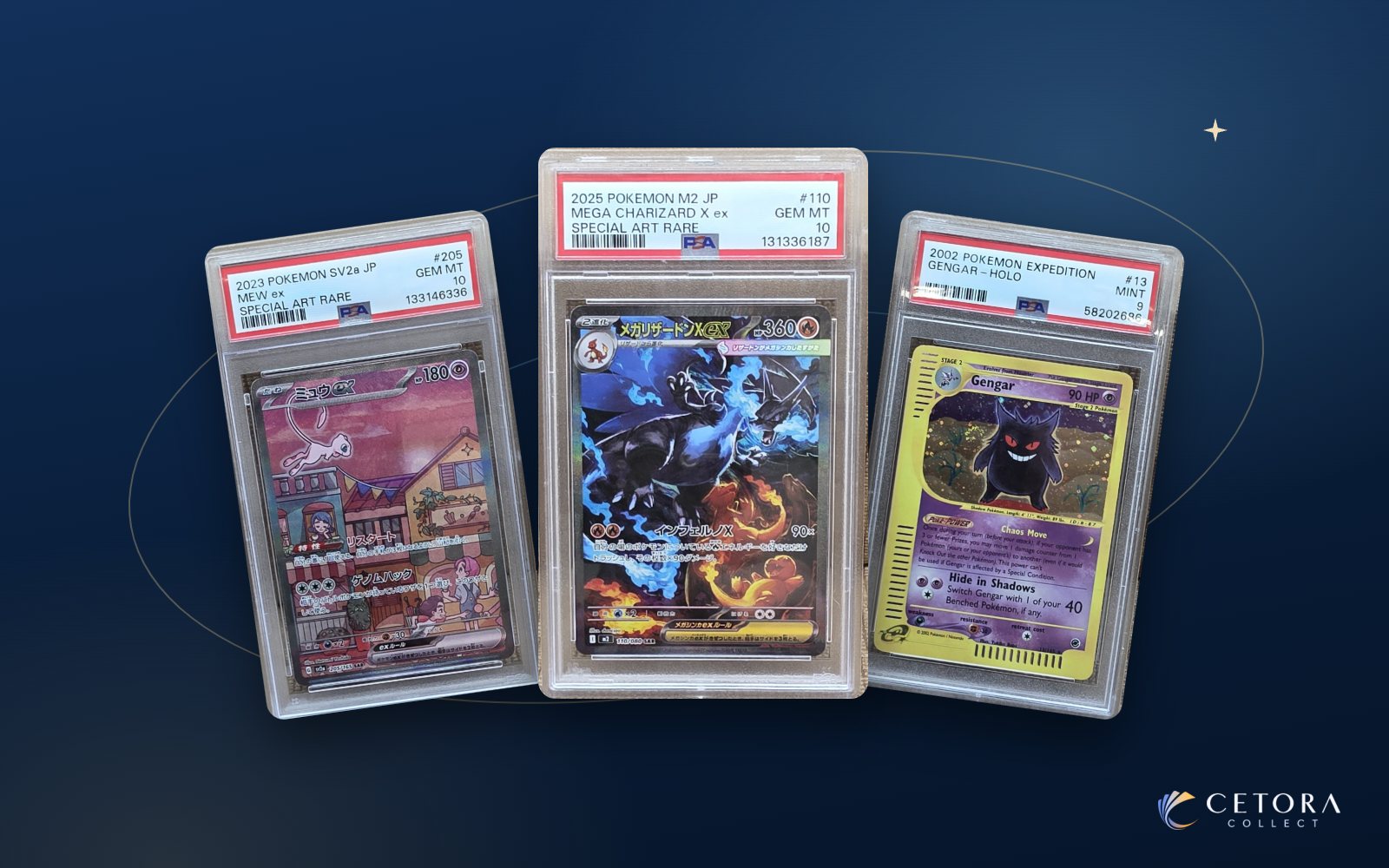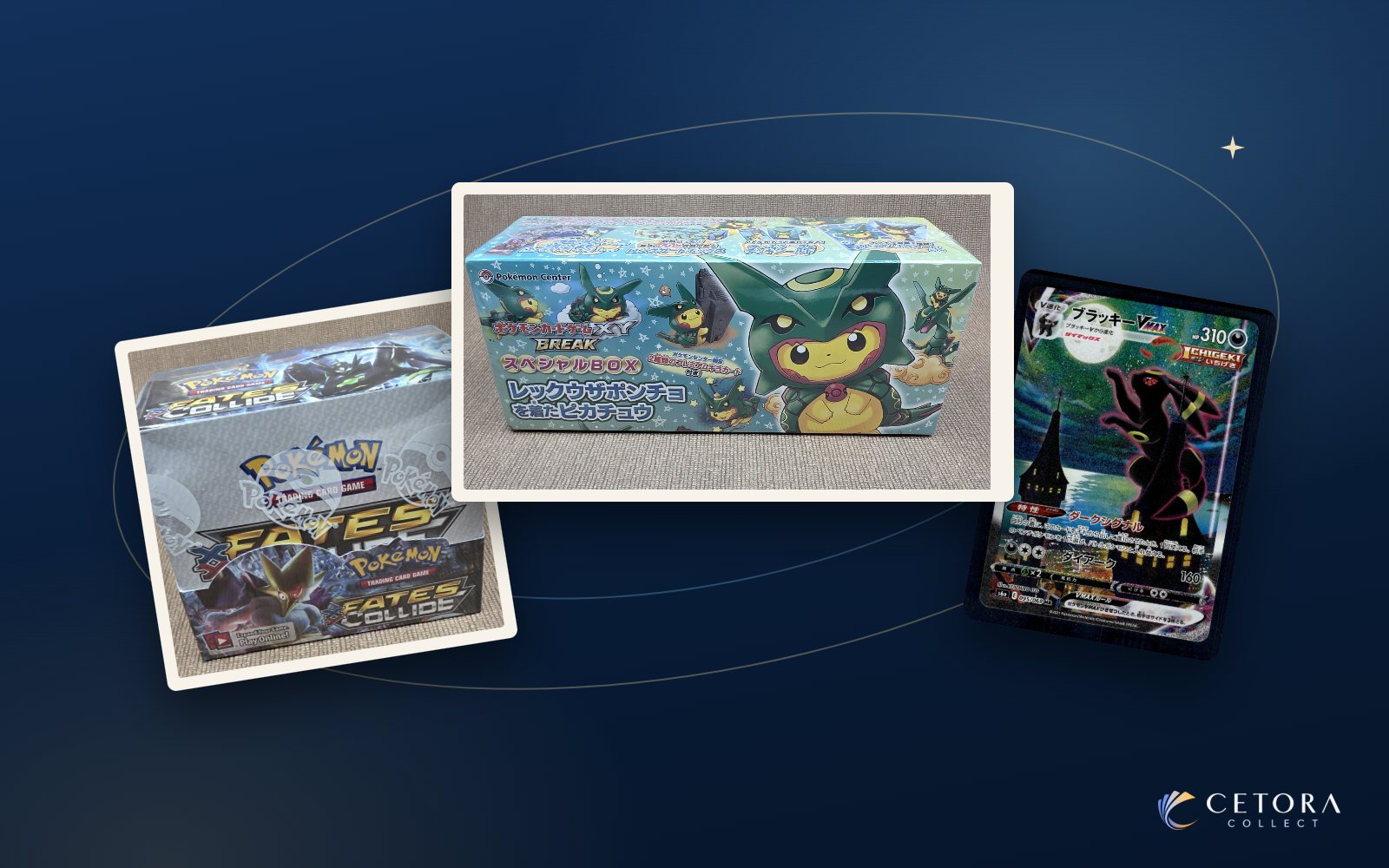
For some years now, Pokémon cards have been more than just a game or a collector's hobby: people talk about “market value” and “assets”, and sometimes about “investment”. Some cards have indeed seen their prices soar. Others, bought at the height of a craze, may never get back to their purchase price.
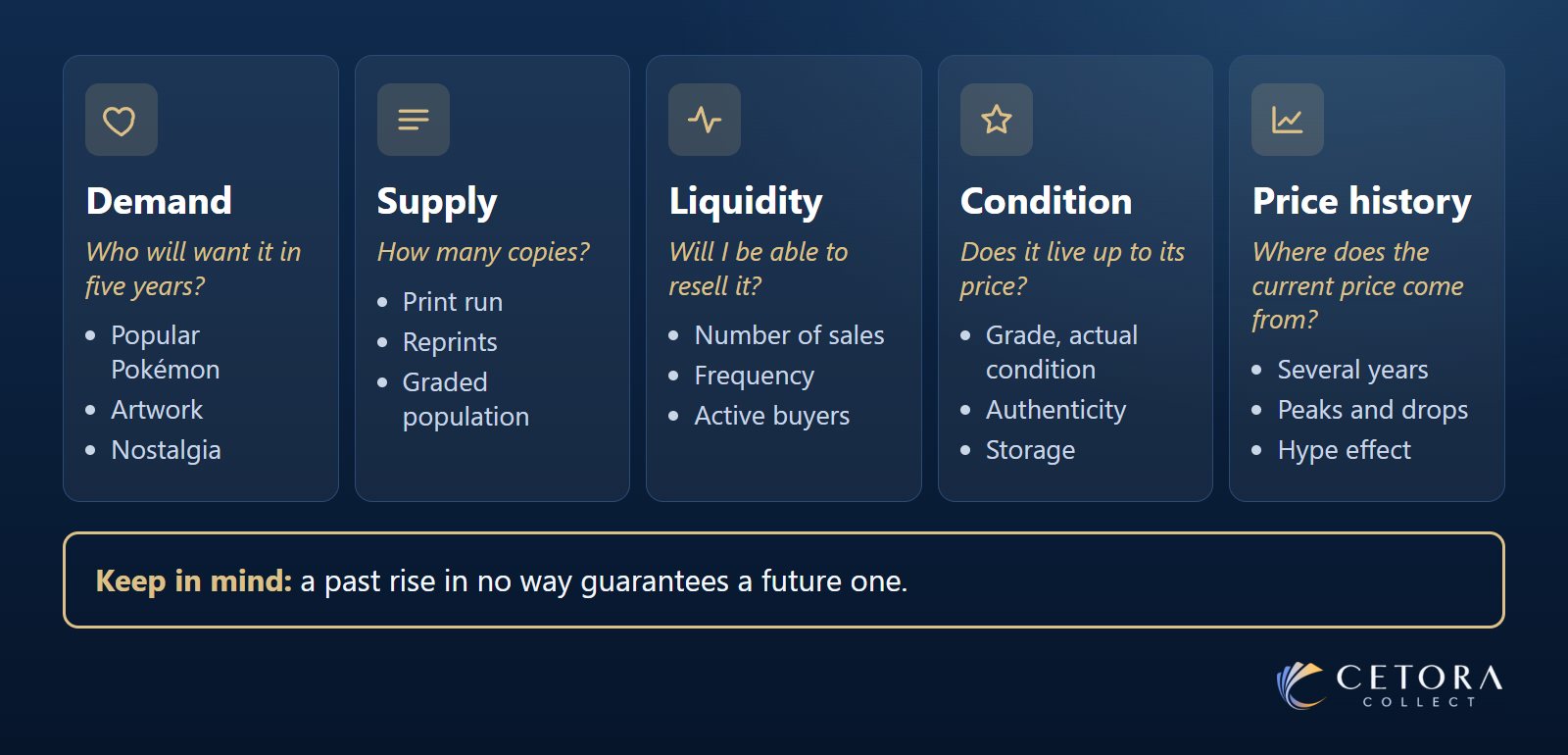
Rather than listing “the cards to invest in”, this guide gives you the framework we use to analyse a piece, whether it is a card, a graded card or a sealed product. Five questions to ask yourself before every major purchase.
Why talk about analysis rather than investment
A Pokémon card is not a financial investment. It pays no interest or dividends, cannot be resold in one click at the listed price, and costs money both to buy and to sell: commissions, shipping costs, insurance, sometimes grading. Its price depends solely on what another collector is willing to pay on the day you want to sell it.
That does not stop you from buying wisely. A well-chosen piece, bought at a fair price and properly stored, stands a good chance of retaining its appeal. That is the whole point of the analysis that follows.
1. Demand: who will want this piece in five years' time?
A card's price depends first and foremost on how many people want it. Several factors sustain demand over the long term:
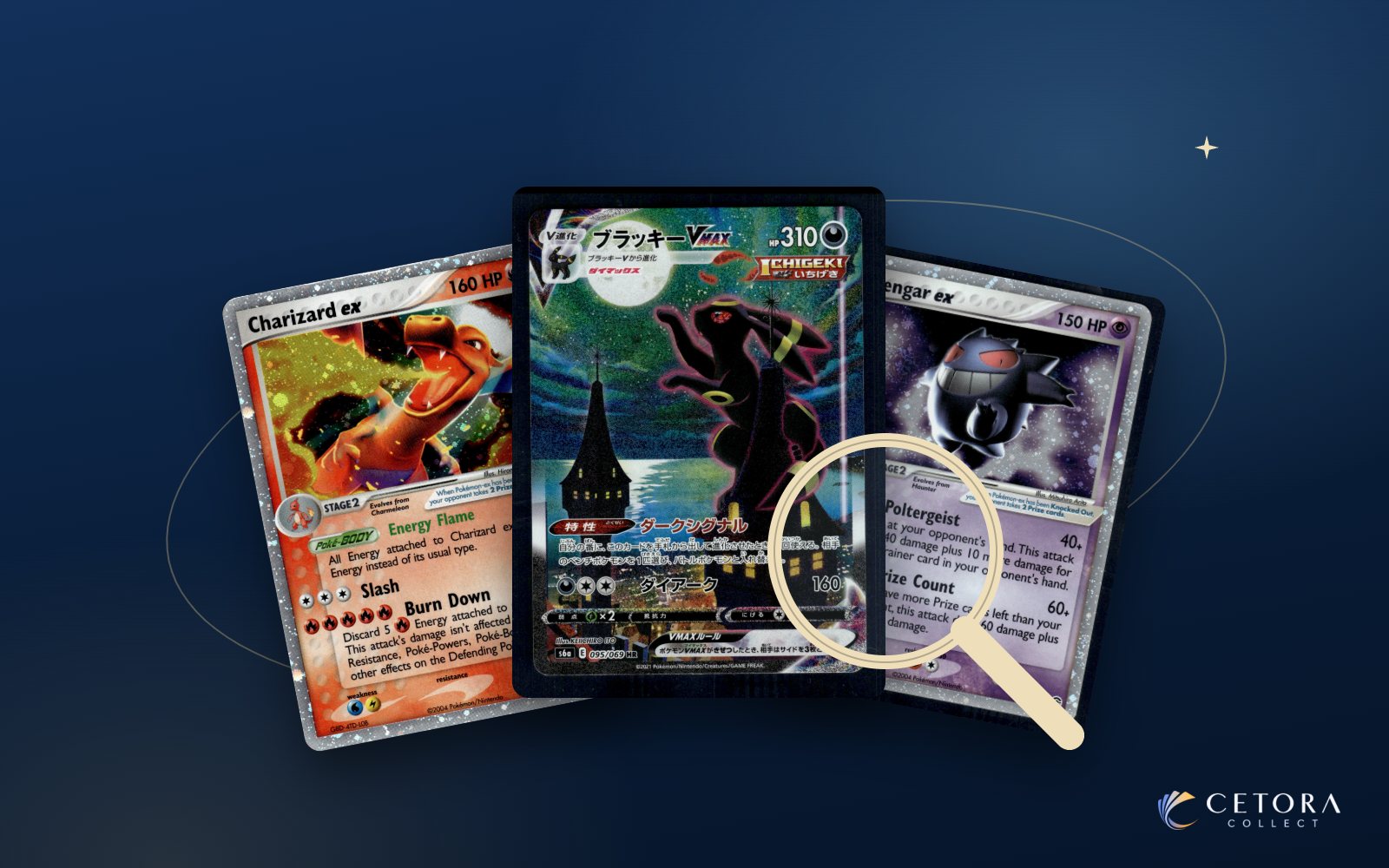
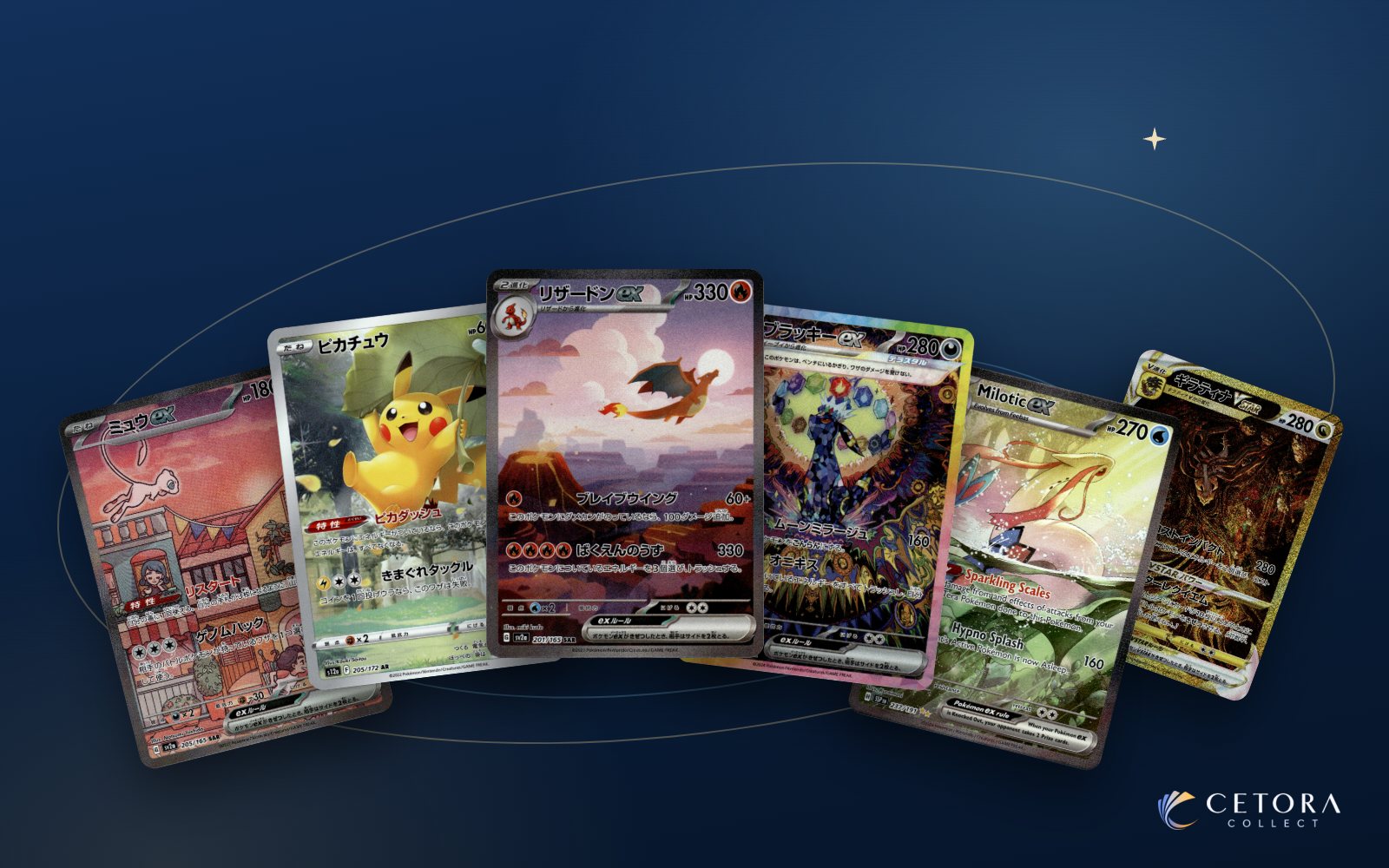
- the Pokémon itself: some, such as Charizard, Pikachu, Mewtwo, Gengar or Eevee's evolutions, attract collectors generation after generation;
- the artwork: full-art cards, renowned artists and striking compositions clearly stand out;
- nostalgia: the series from the childhood of a generation of collectors, who are now adults with spending power, remain highly sought after;
- language: depending on the card, demand is concentrated on English, Japanese or another language.
Conversely, demand driven solely by a recent release, a passing fad or booster-opening videos can fall as quickly as it rose.
2. Supply: how many copies really exist?
The second half of the equation is the number of copies available, today and tomorrow. It depends on:
- the print run and reprints: a set that is reprinted for months is anything but rare;
- the survival of copies: older cards have been played with, traded and damaged; few remain in perfect condition;
- the graded population: grading companies publish the number of cards graded at each grade. A high “pop report” count at grade 10 limits how rare that grade is;
- the distribution: products exclusive to a shop, an event or a country, promos distributed in limited quantities.
The volumes involved are considerable: according to The Pokémon Company, more than 85 billion cards had been produced by the end of March 2026, and in recent years 10 to 12 billion have been printed every year. The publisher says it is producing at maximum capacity and reprinting products that are out of stock. For a recent card, rarity should therefore be assessed with caution.
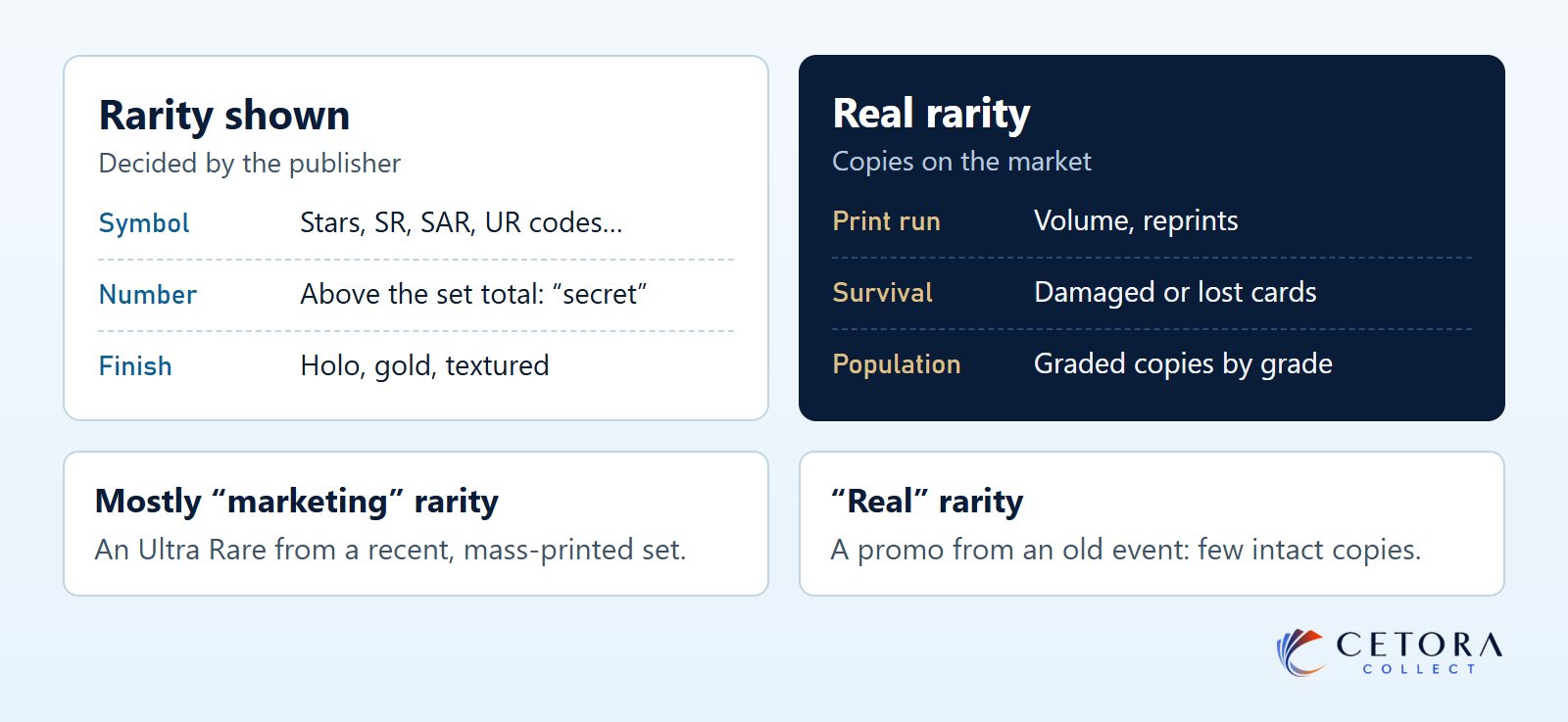
This is the difference between marketing rarity and real rarity. The symbol printed on a card shows its place in the set, not the number of copies in circulation. A “secret” card from a mass-printed set can be easier to find than a promotional card handed out at a single event twenty years ago.
3. Liquidity: will you be able to resell?
A piece only has value if someone buys it. Before buying, look at:
- the number of sales completed in recent months: a handful of sales a year makes any estimate unreliable;
- the frequency of transactions: a card that sells every week is easier to resell than a piece that changes hands once a year;
- the depth of the market: how many active sellers and buyers, and at what prices?
The more expensive and rare a piece is, the harder it often is to resell quickly at the right price. This is not a flaw, but a constraint to factor in: you need to be able to wait for the right buyer.
4. Condition: value is in the details
For a card, condition often accounts for most of the price. A card graded 10 can be worth several times as much as the same card graded 9, and an ungraded copy in nice condition sells somewhere in between, depending on the risk perceived by the buyer. For an important piece, a card graded by a recognised company provides two guarantees: authenticity and certified condition, which can be verified using the certificate number.
For a sealed product, condition is about the packaging: intact shrink wrap with no tears or holes, a box with no crush damage or discolouration. And above all, you need to make sure that the product has never been opened and then resealed.
5. Price history: useful, but not predictive
Looking at how a price has moved over several years helps you understand a market: peaks of hype, drops after a reprint, the stability of a safe bet. But the past tells you nothing about the future. A curve that has been rising for three years can reverse as soon as a reprint is announced or the hype dies down.
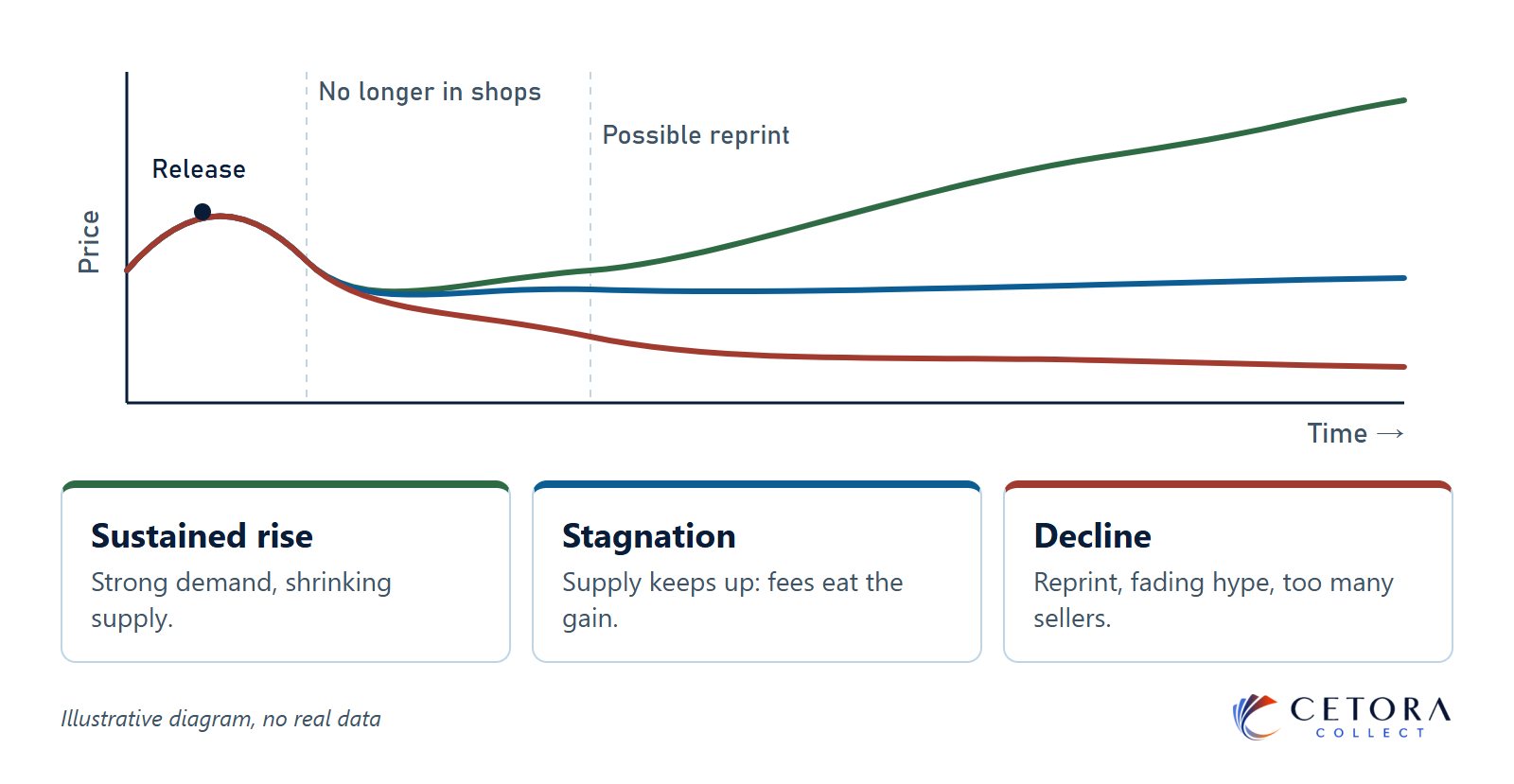
A few rules of thumb:
- be wary of buying at the height of a craze: the price already reflects the enthusiasm of the moment;
- distinguish between a rise driven by many sales and a rise built on a handful of transactions;
- bear in mind that the publisher can reprint a product or a card, and has already done so to meet strong demand.
There is no shortage of recent examples on the US market, as tracked by TCGplayer. The Umbreon ex Special Illustration Rare card from Prismatic Evolutions, which had reached around 1’600 dollars at the height of the hype, was changing hands for around 1’245 dollars at the end of May 2025. In July 2026, TCGplayer noted “a massive wave of reprints” of the Destined Rivals Elite Trainer Boxes. And the Mega Gengar ex 284/217 card lost 366 dollars between the end of June and mid-August 2026, falling to 1’077 dollars. These drops coincide with reprints or with hype fading, although the cause cannot always be isolated.
The special case of sealed products
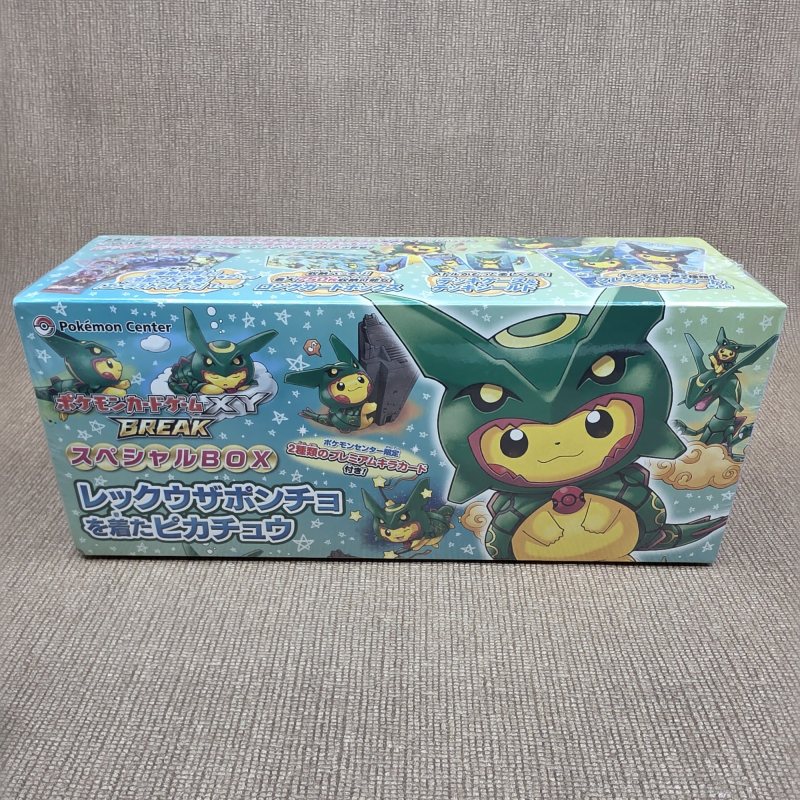
Booster boxes (displays), collection boxes, Elite Trainer Boxes: sealed products are appealing because they become scarcer over time, as more and more of them are opened. Analysing them comes down to a few specific points:
- availability: as long as a product is on sale in shops or likely to be reprinted, its rarity remains theoretical;
- age: the older a product is, the rarer intact copies become;
- the popularity of the set and its chase cards: a sealed product derives much of its value from the cards that can be found inside;
- the format: exclusive products (for example those from the Japanese Pokémon Center stores) follow a different collecting logic from booster boxes;
- authenticity: a product that has been opened and then resealed with new shrink wrap is a common fraud. Buy from reliable sellers, and examine the packaging before any significant purchase.
Spotting a resealed or counterfeit product
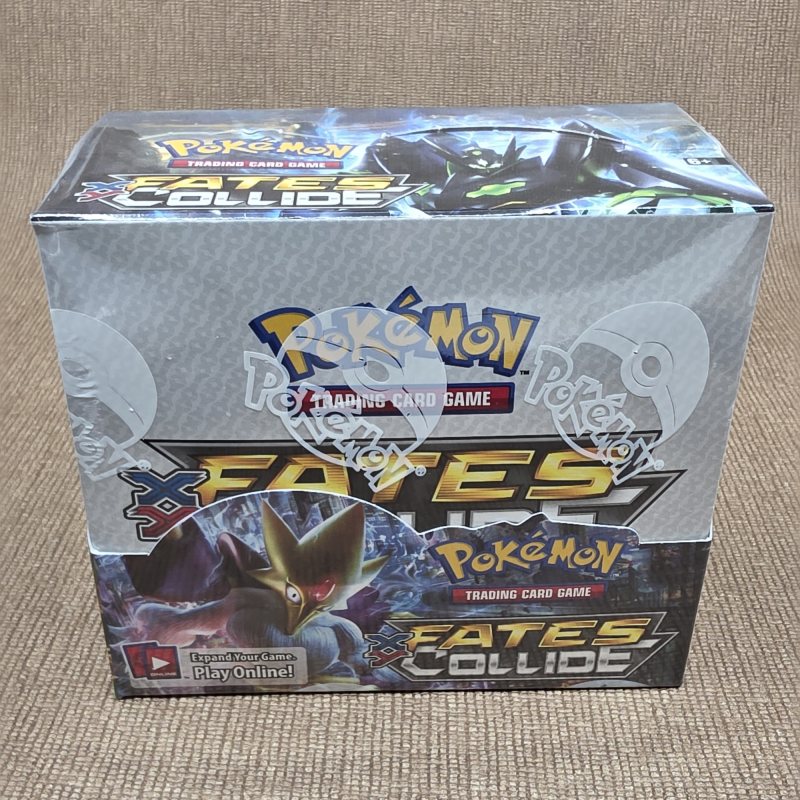
According to Cardmarket, several signs should put you on your guard with a booster box, a collection box or any other box:
- the seam: The Pokémon Company never seals its products with more than one seam on the side of the box;
- the watermark on the shrink wrap: a Poké Ball with the word “Pokémon” underneath, followed by the © symbol, which counterfeits often leave out;
- the plastic: stretch marks, burns or bubbles near the seam reveal lower-quality shrink wrap;
- the arrangement of the boosters: in a genuine booster box, they are always arranged from front to back, never from left to right;
- the printed text: a wrong copyright year, the name of a product that does not exist, a mention of Nintendo or “Pokémon USA, Inc.” on a recent product.
On Japanese booster boxes, in 2022 the publisher added a perforated tear strip for opening the box: once removed, it leaves a visible mark.
Proper storage
The US Library of Congress recommendations for preserving paper provide good reference points: 21 °C at most, relative humidity between 30 and 55%, without sudden fluctuations, and as little light as possible, since light damage is cumulative and irreversible. So avoid attics, cellars, garages and windowsills. For protective materials, choose the stable plastics the Library recommends: polypropylene, polyethylene or polyester. Valuable cards go in a sleeve and then a rigid holder; sealed products are best protected by a well-fitting acrylic case.
The costliest mistakes
- Buying under pressure from a rapid rise or the fear of missing out.
- Forgetting the costs: between buying and reselling, commissions (from 5 to 12% depending on the platform), shipping and insurance eat into your profit.
- Confusing stated rarity with real rarity.
- Neglecting authenticity: counterfeits, fake grading labels, repackaged sealed products.
- Betting everything on a single piece or a single set.
- Storing a piece poorly, so that it loses its condition and therefore its value.
Our approach for Cetora Select
Cetora Select brings together pieces that we consider solid in the light of this framework: important graded cards, vintage sealed products and rare pieces. Each one is presented with detailed photos and, for graded cards, the certification details needed to verify the grade.
We do not promise that their prices will rise. What we focus on is making sure you know exactly what you are buying: an authentic piece, honestly described, whose collecting appeal rests on concrete factors rather than on a passing fad.
Frequently asked questions
Do sealed products always increase in value?
No. Many recent products sell below their release price for years, especially when they have been printed or reprinted in very large quantities. Only some sealed products actually become rare.
Is it better to buy a graded card or a sealed product?
These are two different approaches. A graded card is a specific piece, in certified condition and easy to verify. A sealed product is a bet on the future appeal of an entire set, bulkier to store and more exposed to reprints as well as to counterfeit packaging.
How long should you keep a piece?
There is no ideal holding period. In practice, buying and selling costs make quick flips rarely profitable: a collector piece is better considered over several years, accepting that its price may also fall.
How can you check a graded card before buying it?
Enter the certificate number shown on the label into the grading company's verification tool: the card, the set and the grade must match exactly. Also examine the slab, which must show no signs of having been opened.