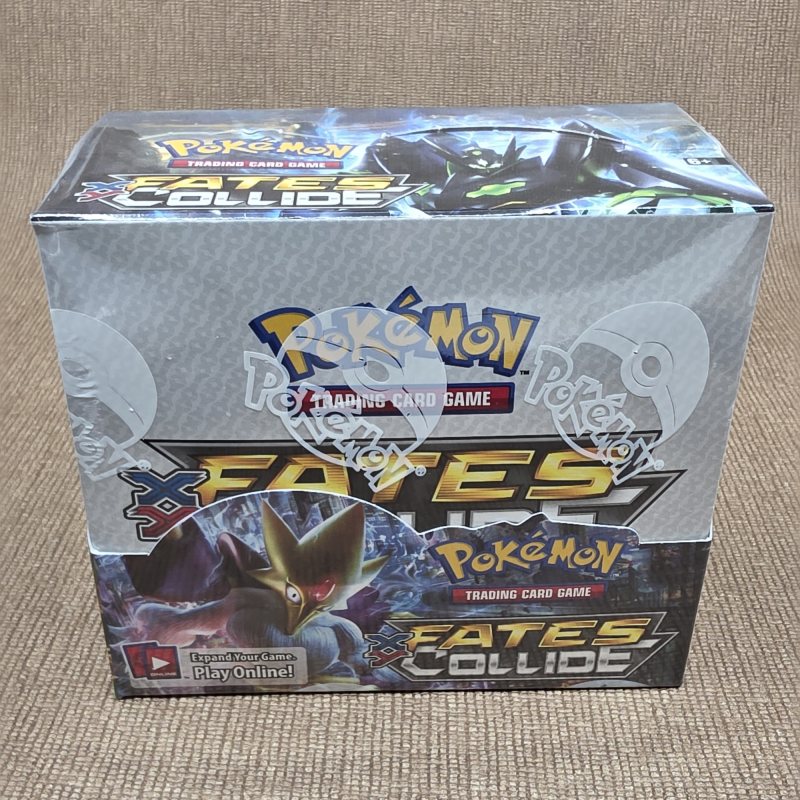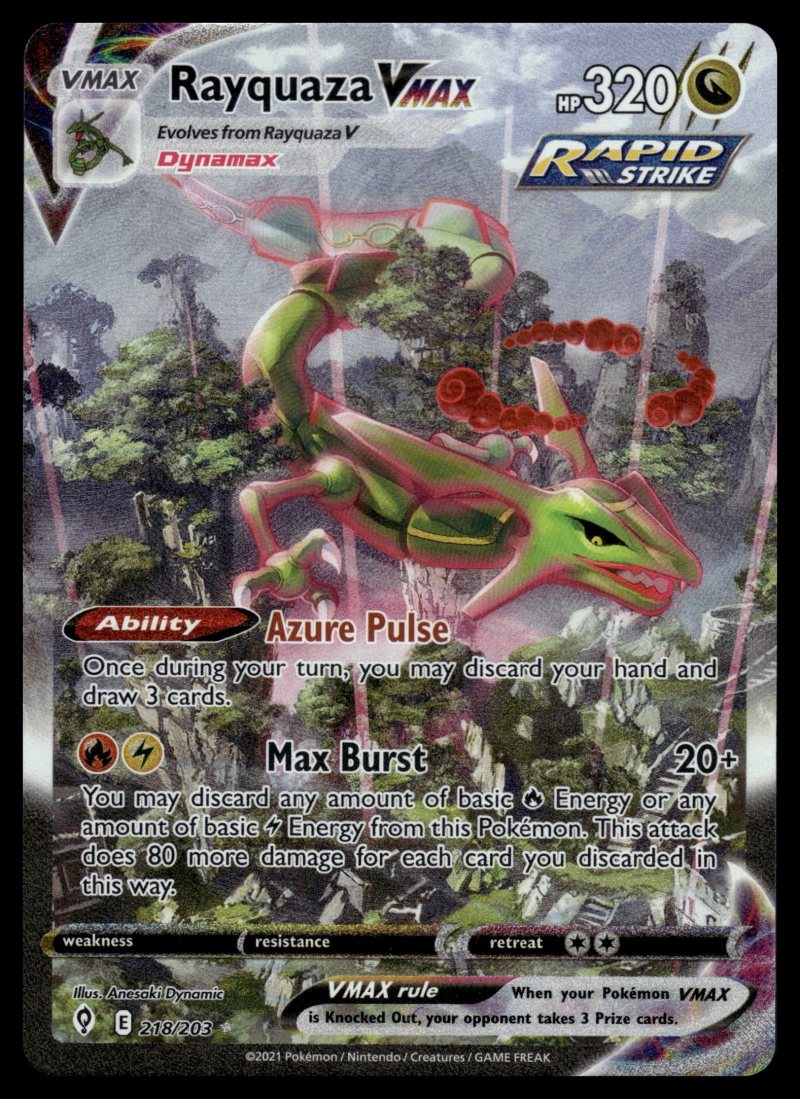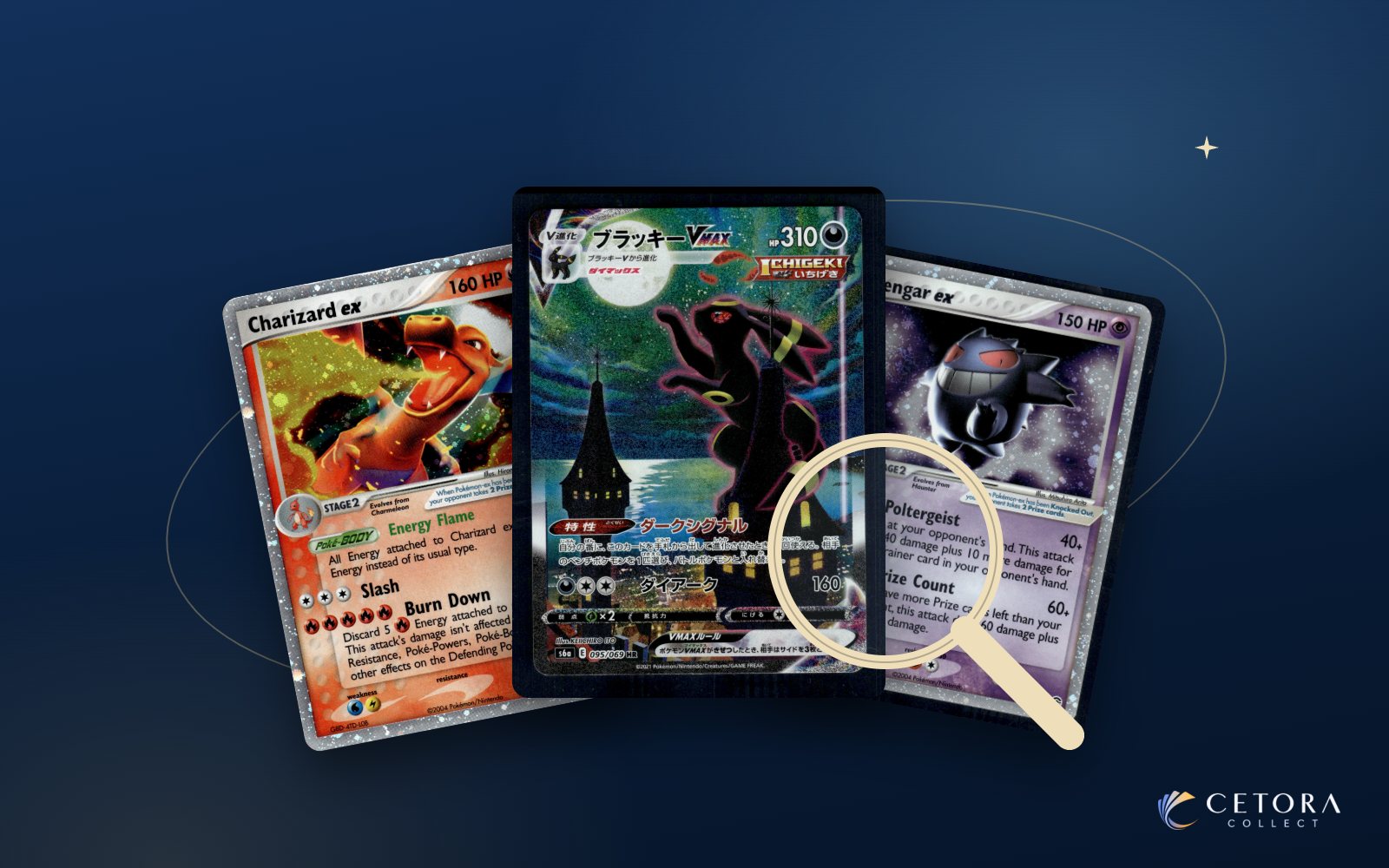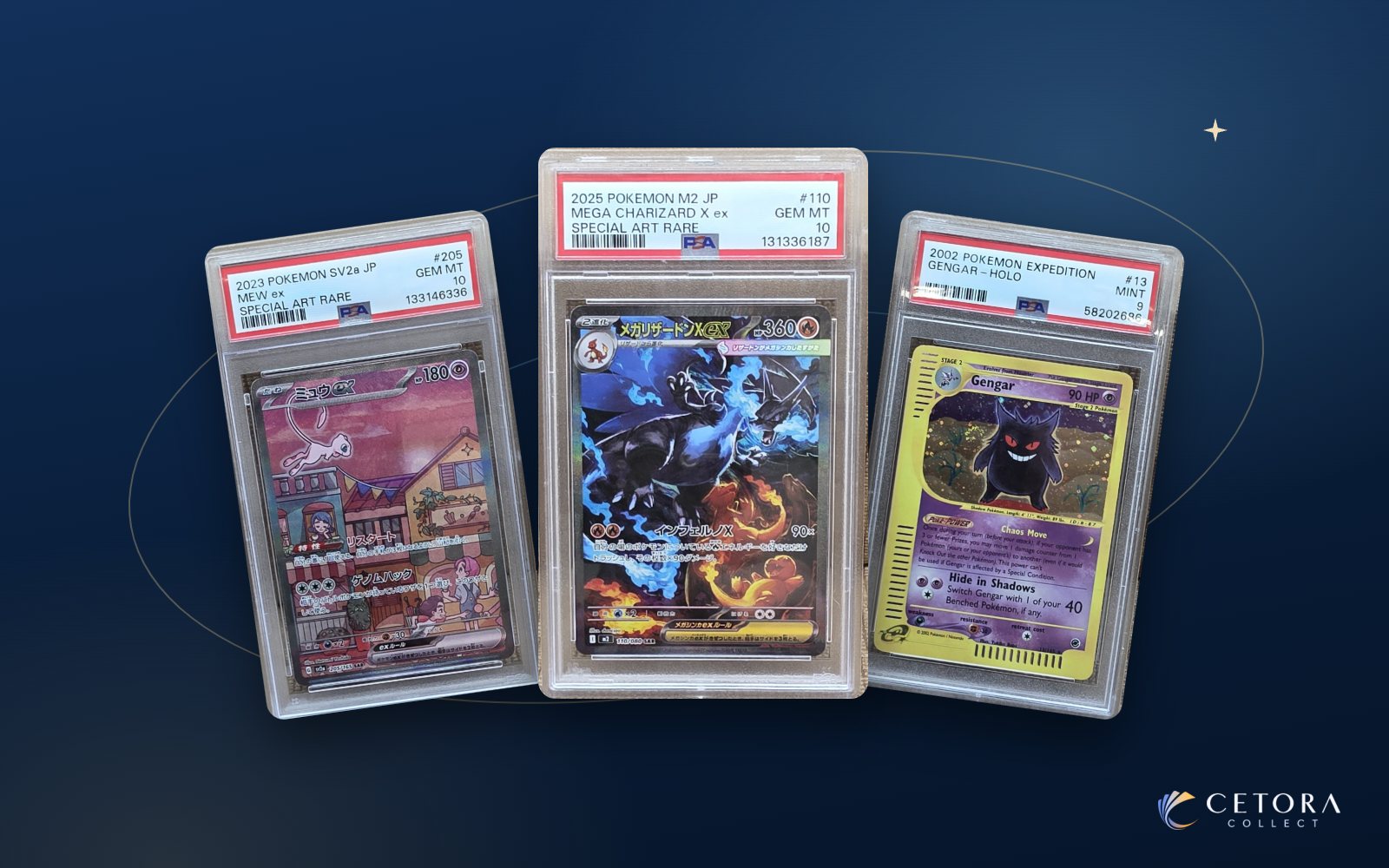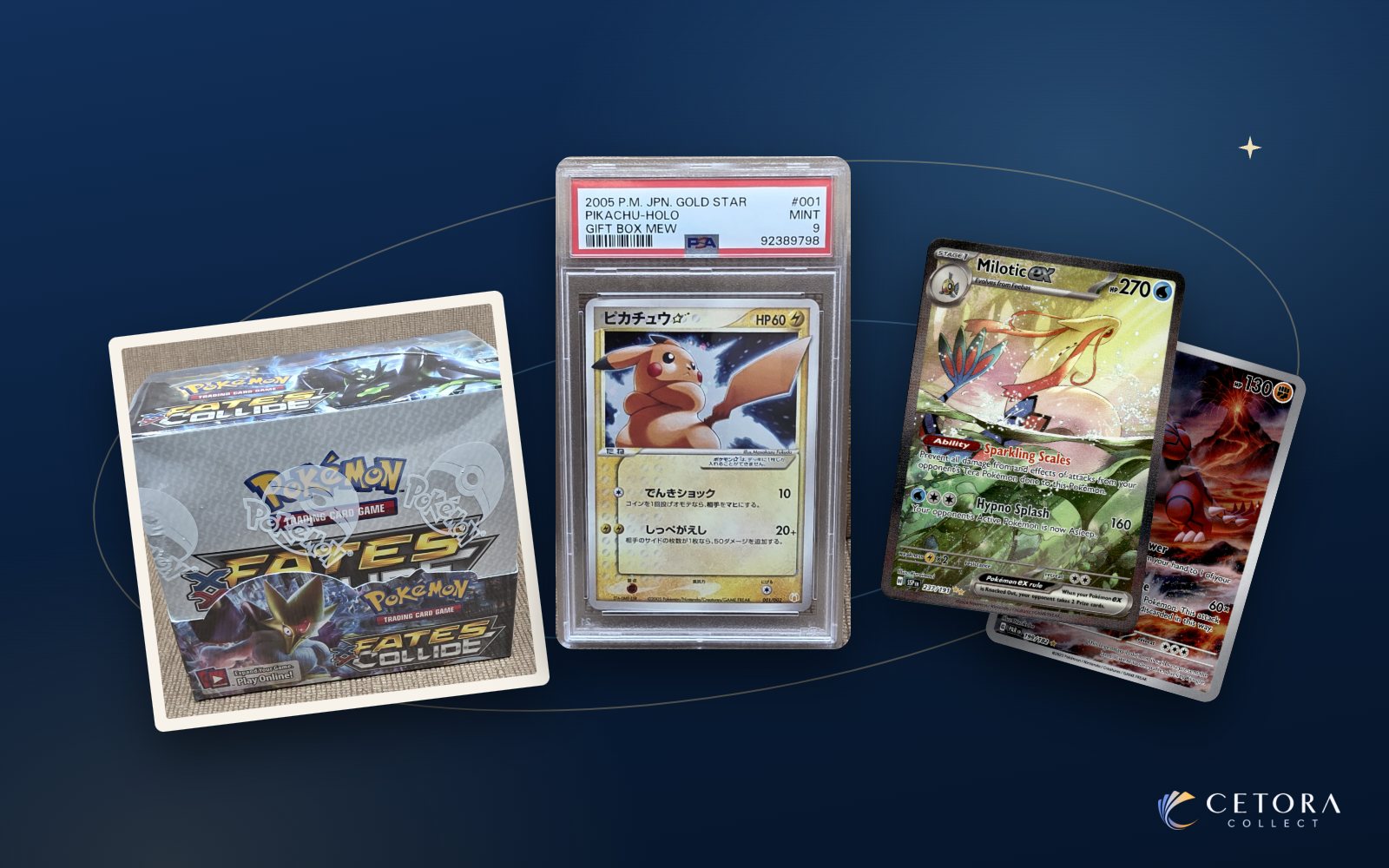
A specific card to complete a collection, a graded card for a showcase, a booster box (display) to keep sealed: buying Pokémon cards from Switzerland offers plenty of possibilities today. But between the hidden costs of buying abroad, unscrupulous sellers and counterfeits, it is easy to pay too much, or to pay for nothing.
This guide reviews where to buy, the checks to make before paying and the costs to expect, so that you can buy at a fair price and with complete confidence.
Buy in Switzerland or abroad?
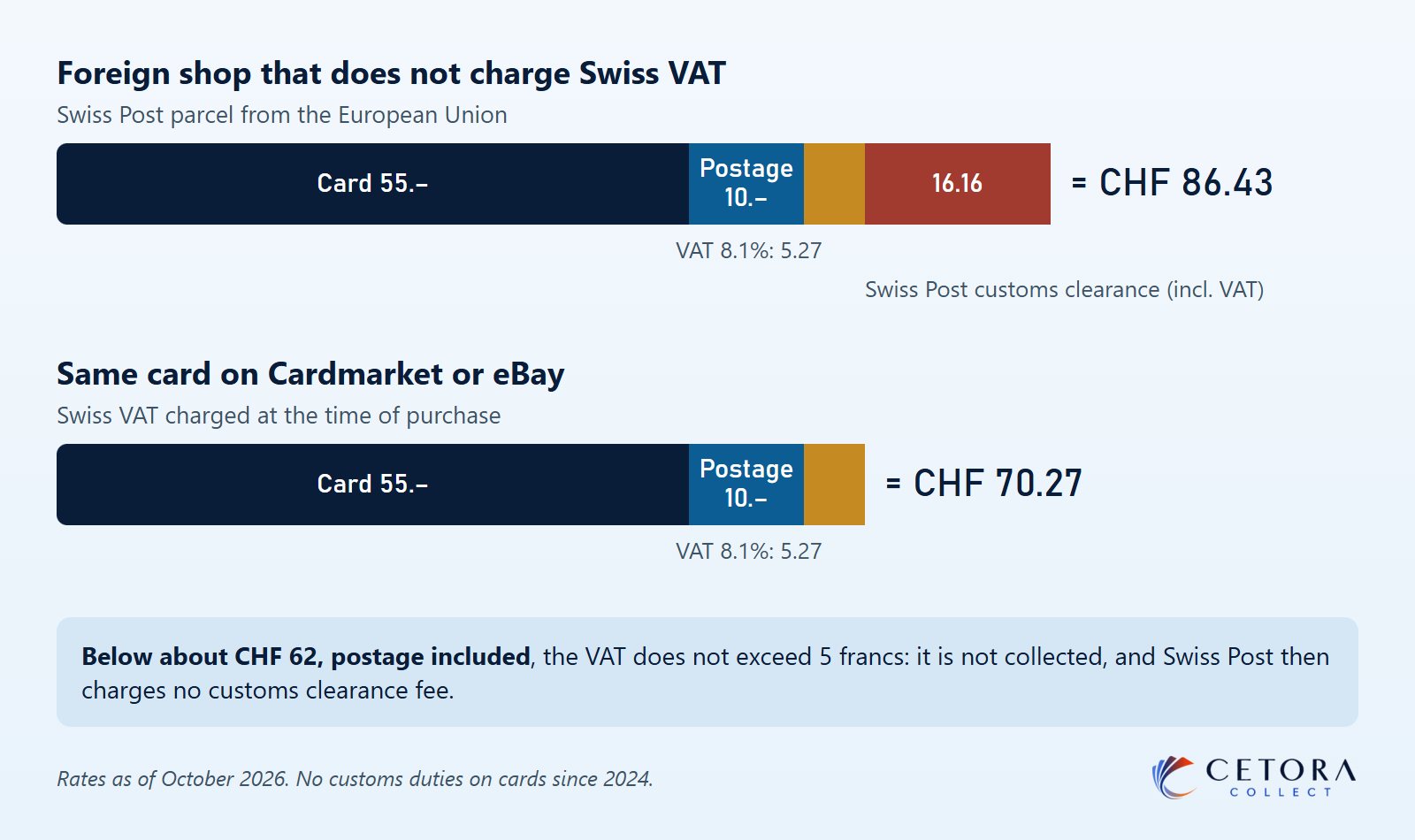
European, American or Japanese platforms sometimes show lower prices than in Switzerland. But the price shown is not the final price. For a shipment from abroad, you need to factor in:
- shipping costs, often high for a tracked and insured shipment;
- Swiss import VAT, at a rate of 8.1%, calculated on the price and shipping;
- customs clearance fees charged by the carrier: with Swiss Post, 13 francs for a shipment from the European Union (16 francs from elsewhere), plus 3% of the value, up to a maximum of 70 francs, excluding VAT;
- the exchange rate and any bank charges;
- a longer delivery time, and more complicated recourse if there is a problem.
There is good news too. Since 1 January 2024, cards no longer incur customs duties, whatever their origin. VAT is not collected if it does not exceed 5 francs, which corresponds to a shipment of about 62 francs including shipping, and Swiss Post then charges no customs clearance fees. Above all, Cardmarket and eBay now charge Swiss VAT themselves at the time of purchase: in principle, you no longer have anything to pay on delivery. Unpleasant surprises mainly come from foreign shops that do not charge Swiss VAT.
The detailed rules are published by the Federal Office for Customs and Border Security (FOCBS), and the customs clearance fees by each carrier.
For a card costing a few francs, these costs rarely make buying abroad worthwhile. For a valuable piece, they need to be calculated precisely: the price difference must cover all the costs, and the risk.
Where to buy Pokémon cards?
Cardmarket
The widest choice in Europe, with listings sorted by condition and language, and the history of sale prices. It is an excellent price reference. Since October 2025, Cardmarket has been charging Swiss VAT (8.1%) at the time of purchase on all orders delivered to Switzerland: in principle, you have nothing to pay on delivery.
Ricardo
The leading Swiss platform: no customs, fast shipping, sellers you can sometimes meet in person. The choice is more limited, and the quality of listings varies widely. Favour listings with the Protection+ option: you pay by TWINT or by card, and the seller is only paid once you have confirmed receipt (for items up to 5’000 francs, between private individuals in Switzerland).
eBay
A worldwide selection, particularly useful for Japanese cards and graded cards. eBay charges Swiss VAT on orders delivered to Switzerland; that still leaves international shipping costs, which are sometimes high, and longer delivery times.
Facebook groups and conventions
Dealing directly with other collectors and going to fairs allow you to see the cards before buying and to discuss the price. But purchases between private individuals offer no protection: caution is called for.
Specialist shops
A specialist Swiss shop sells cards in francs and without import costs, with descriptions and photos of the actual piece being sold, and someone to talk to if you have a question. Prices include the work of selecting, checking and storing the cards.
Checking a seller before you pay
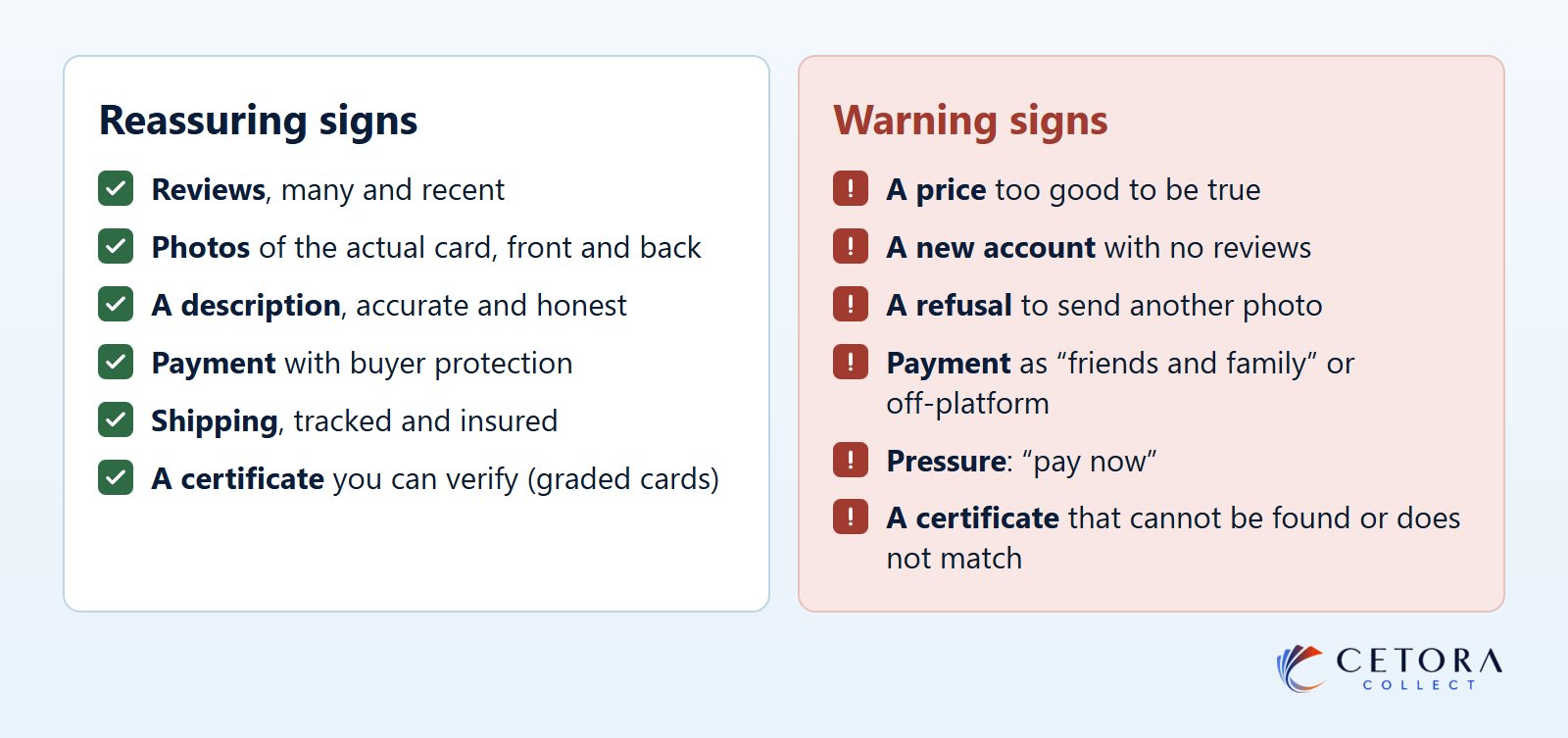
For an expensive card bought from a private individual, always ask for an additional photo taken on the day of your request (with a piece of paper bearing your name, for example). An honest seller will not mind.
Spotting a fake card
There are many Pokémon card counterfeits, especially of popular cards and “shiny” cards. The most effective method is still to compare the card with a genuine one from the same set, or with the official images. Cardmarket, which bans counterfeits, lists the most common flaws:
- the word “Pokémon” without an accent: a tell-tale sign, as such a printing error is highly unlikely on a genuine card;
- the Energy symbols too large in their circle or off-centre;
- the text: a font or colours different from the original, text from another card left unchanged, an inconsistent evolution stage, a “2nd edition” marking, which does not exist;
- the colours: a saturation different from the original, often duller;
- the border: far too thick, or gold on a card that does not really have a gold border;
- the finish: a crude holographic effect, missing texture on cards that should have one, such as GX cards;
- the card stock: glossy and shiny, with an unusual feel.
The Pokémon Company also advises holding the card up to a bright light: a counterfeit often lets the light through. If in doubt, a shop specialising in trading cards can examine it.
Finally, be wary of prices that are too good to be true. According to the publisher, a booster sold well below the recommended retail price is almost certainly a counterfeit; a sought-after card offered far below its value should arouse the same suspicion. Flea markets are, in fact, the most common source of counterfeit sales reported to The Pokémon Company.
For a valuable card, the safest solution is still to buy a card authenticated and graded by a recognised grading company, or from a seller who takes responsibility for its authenticity.
Graded or ungraded card?
| Ungraded card | Graded card | |
|---|---|---|
| Price | Lower | Higher, depending on the grade |
| Authenticity | Up to you to check | Guaranteed by the grading company |
| Condition | Assessed by the seller | Graded and certified |
| Protection | Sleeve and case | Sealed slab |
| Who is it for? | Collecting, playing, a controlled budget | Valuable pieces, display, resale |
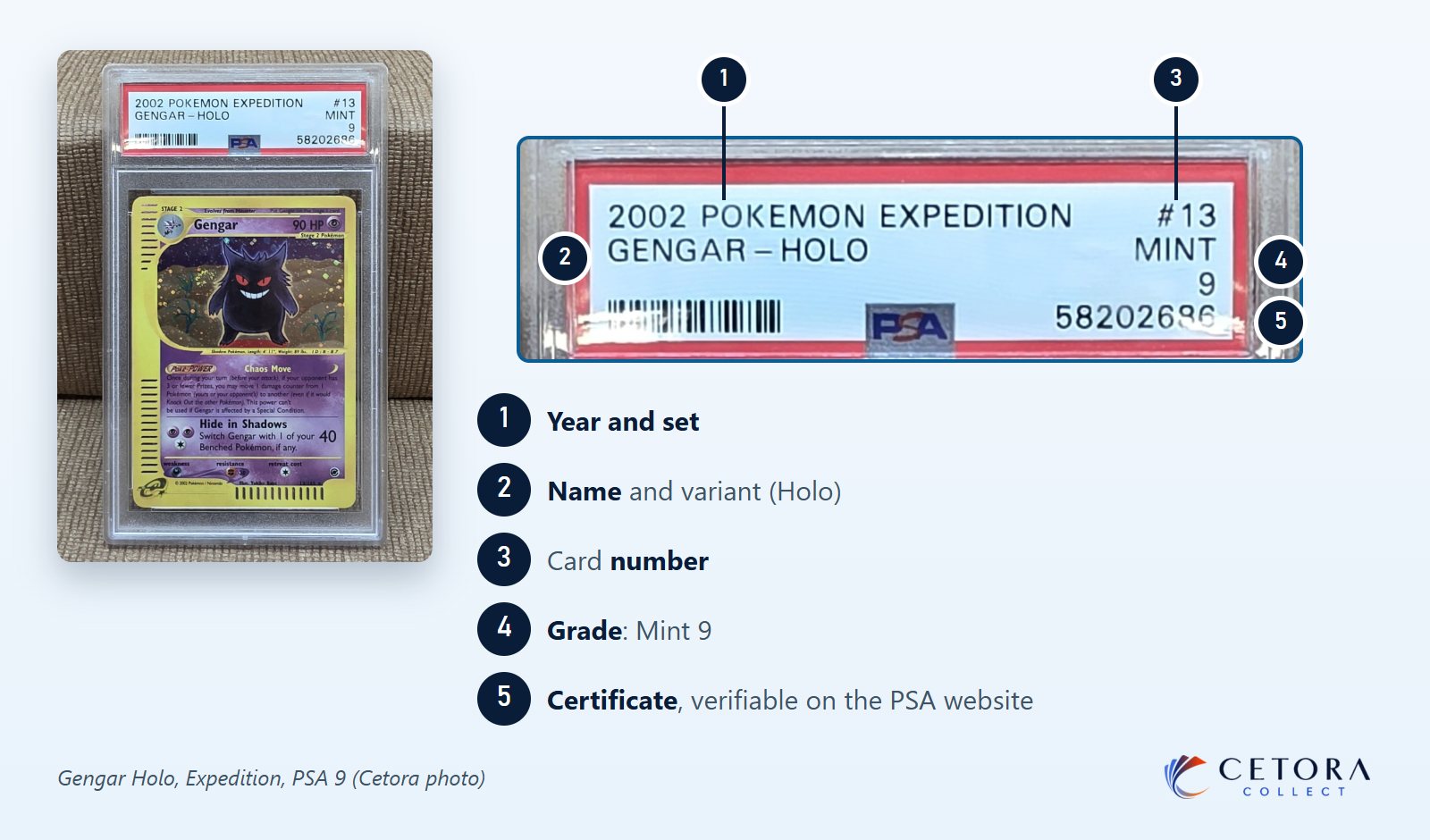
Before buying a graded card, check its certificate number on the grading company's website, and compare its price with recent sales of the same grade, for example with the Collectr app.
Payment and delivery
- Favour a payment method with recourse: credit card or a payment protected by the platform. A bank transfer or a payment to a private individual is hard to recover.
- Insist on a tracked shipment, and an insured one for valuable pieces.
- Check the packaging on receipt, and film yourself opening a valuable parcel.
Premium pieces
For an important graded card or a vintage sealed product, the bar goes up a notch: authenticity, condition, provenance and price history. Our guide Pokémon cards and sealed products: how to analyse their collecting potential sets out the questions to ask yourself before a major purchase.
Frequently asked questions
Where can I buy Pokémon cards in Switzerland?
In specialist shops, on Ricardo, or abroad via Cardmarket or eBay, taking import costs into account. For a valuable piece, favour a seller who shows photos of the actual card being sold and takes responsibility for its authenticity.
Do I have to pay customs on Pokémon cards bought abroad?
No customs duties: they were abolished for cards on 1 January 2024. However, Swiss VAT of 8.1% applies to the price and shipping, unless it does not exceed 5 francs (a shipment of about 62 francs at most, shipping included). The carrier also charges customs clearance fees: with Swiss Post, 13 francs for a shipment from the European Union plus 3% of the value, excluding VAT. On Cardmarket and eBay, VAT is charged directly at the time of purchase.
How can I tell whether a graded card is authentic?
Check the certificate number on the grading company's website, compare the card with the photos in the database where they exist, and examine the slab: it must show no sign of having been opened.
Is it safer to buy graded cards?
For authenticity and condition, yes, provided you check the certificate. But a graded card costs more, and its grade has a strong influence on its price: always compare with sales of the same grade.